
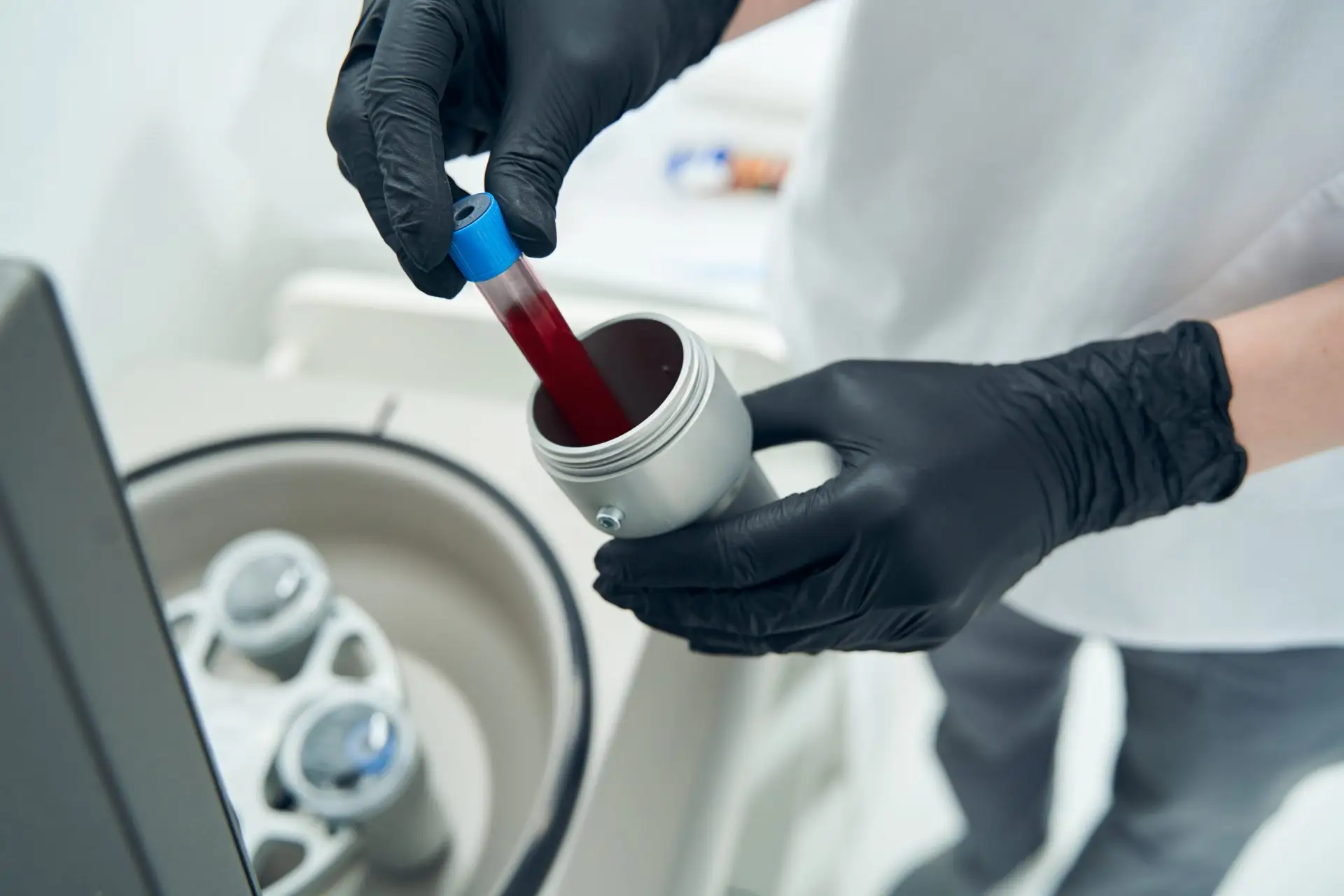
Everyone operating in the healthcare sector knows blood samples must be transported in proper collection tubes, and that these need to be stored in temperature-controlled environments to ensure sample viability.
However, even healthcare professionals might be uncertain how are blood samples transported.
What are blood sample logistics?
Who are the people transporting blood samples to laboratories?
Are there blood sample transportation guidelines that couriers or delivery people must adhere to?
Blood sample transportation is more complex than many realise.
Behind every successful diagnostic test lies an intricate choreography of temperature control, timing, handling protocols, and documentation.
While we think of transportation of blood samples as something that happens only at the point of care, the journey a blood sample takes to reach the laboratory after extraction is equally critical to ensuring accurate results and optimal patient care.
With the volume of samples drawn and tested each day, efficient blood sample transportation isn’t just about moving specimens from A to B – it’s also about maintaining sample integrity, ensuring compliance, and optimising healthcare delivery.
In this article, we’ll look at how are blood samples transported and the logistics and guidelines around it.
How are blood samples transported?
Once a sample is taken from a patient, how are blood samples transported for testing?
Some hospitals have in-house labs where tests can be conducted within the hospital’s grounds.
Others might have to send samples to specialised labs for testing.
How to transport blood samples within a hospital?
In hospital settings, transportation of blood samples happens through several carefully coordinated methods.
The primary system is the pneumatic tube system (PTS), which enables rapid transport between different areas within single hospital buildings or connected campuses.
For departments that aren’t connected by the PTS, temperature-controlled courier boxes are used to maintain sample integrity during transit.
Some hospitals employ dedicated portering staff for the transportation of blood samples who manually transport samples between departments, providing a reliable backup system and handling special cases where automated systems aren’t suitable or available.
This multi-layered approach ensures consistent and timely delivery of samples while maintaining proper temperature control and handling procedures throughout the process.
How to transport blood samples outside the hospital?
For blood samples that must be sent outside a hospital’s premises, blood sample logistics are a little different.
The blood sample logistics in this case are a combination of hospital staff and dedicated medical courier services.
The journey begins when the sample is collected from the patient and processed for handover and transport.
Healthcare professionals must identify and label each sample, and conduct initial assessments to ensure the specimen is suitable for transport.
Temperature stabilisation begins immediately following collection, and samples requiring transport must be in temperature range before any movement occurs.
Each of these initial steps must be documented to create a record and an audit trail of the samples’ journey.
During packaging, healthcare staff select appropriate containment systems that meet UN3373 requirements which are a part of the blood sample transportation guidelines.
In the transportation of blood samples, every sample must follow UN3373 containment requirements.
The packaging guideline ensures the safety of the sample, preventing spills and contamination, ensuring the shipment complies with international transport regulations and maintains integrity for testing.
Finally, during transportation a chain of custody documentation is provided, requiring each handler to use secure authentication to verify their role.
Using a system like Sample360, a comprehensive sample-tracking system designed to streamline laboratory operations and enhance efficiency across every stage of a sample’s lifecycle, allows you to accurately track your sample’s location with an advanced GPS tracking system.
You can also monitor temperature with real-time oversight of sample location and conditions.
Transport categories
For the transportation of blood samples that leave hospital grounds, there are several different paths they can take through the UK’s healthcare logistics network.
Depending on the urgency, specimen type, and specific requirements, samples usually fit into three main transport streams: routine, urgent, and specialist.
Routine
Routine transport forms the backbone of blood sample logistics in the UK healthcare system.
Operating according to planned schedules, these services follow fixed routes and predetermined collection times, efficiently linking hospitals, GP surgeries, and laboratories across local healthcare networks.
This is a systematic approach for the transportation of blood samples that allows for batch processing of multiple samples, maximising cost-effectiveness while maintaining quality standards.
Vehicles are equipped with standard temperature-controlled compartments, typically maintaining the required 2-8°C range, and follow established protocols for sample handling.
This routine service is crucial for maintaining the daily flow of diagnostic testing that supports patient care throughout the whole NHS.
Urgent
Samples that cannot wait for routine collection are classified as urgent, which includes samples for critical care patients or time-sensitive diagnoses.
These samples utilise dedicated rapid transport services with priority handling and direct routing.
Urgent blood samples prioritise speed and reliability.
Unlike routine services, these transports utilise dedicated vehicles and couriers who focus solely on time-sensitive specimens, bypassing standard collection routes in favour of direct, point-to-point delivery.
Specialist
Specialist transport services handle blood samples that require extraordinary care beyond standard protocols, often managing rare or highly sensitive specimens.
These services cater to samples requiring precise temperature parameters, such as those used in clinical trials where even minor temperature deviations could invalidate research data.
For example, cord blood banking requires transport units equipped with liquid nitrogen dewars and continuous temperature monitoring, as outlined in the FACT-JACIE International Standards for Cord Blood Collection, Banking, and Release for Administration.
Who can ship blood samples?
It wouldn’t be a stretch to think that as long as someone has access to proper equipment to transport and monitor the temperature of samples, they would be allowed to ship and transport blood samples.
But transporting blood samples requires more than just packaging and equipment; it requires strict adherence to the guidelines by the company.
These rules allow only specialised and qualified courier services who know how to transport blood samples, because sensitive biological materials are not only fragile but can sometimes be hazardous to public safety.
In the UK, some of the couriers allowed to transport blood samples are:
Courier Express: A major supplier of courier services for medical companies, with vehicles and staff specially equipped for transporting medical and medicinal products.
Speedy Freight: A courier service offering same-day and temperature-controlled deliveries.
Jag Express: A medical courier that has trained drivers and vehicles that are regularly monitored for compliance and cleanliness.
Elite Logistics: A medical courier that can collect and deliver blood samples, sensitive results, and clinical trial materials.
DX Delivery: A courier that offers a tracked specimen service, where you can complete a label, take your specimens to a local exchange, and track your item online.
These approved couriers must regularly demonstrate compliance with ADR regulations (European Agreement concerning the International Carriage of Dangerous Goods by Road) and strictly adhere to blood sample transportation guidelines.
Is it possible to ship blood samples?
Yes. We can now ship blood samples to almost anywhere in the world thanks to technological advancements that can maintain the cold chain and viability of samples.
However, blood sample logistics are highly specialised and can only be carried out through authorised channels and under strict conditions that stick to blood sample transportation guidelines.
Most, if not all, shipping services will refuse to accept biological samples, as domestic and international shipping of blood samples requires additional permits and documentation.
While Royal Mail is equipped to handle blood sample logistics and offers a specialised clinical specimen shipping service within the UK, it has specific restrictions and requirements that must be met.
Air transport of blood samples falls under even stricter IATA regulations and requires specialist courier services with appropriate air cargo certifications.
Common challenges in blood sample transport
Although every healthcare provider does their best to prepare a foolproof and safe way for the transport of blood samples, there are certain challenges that are impossible to eliminate, with temperature control being perhaps the most critical.
Temperature excursions – deviations from the required temperature range – can significantly impact sample integrity and potentially invalidate test results.
Even brief exposure to inappropriate temperatures can affect blood cell stability, enzyme activity, and other crucial biological markers.
Prevention strategies include using validated cooling systems, continuous temperature monitoring, and proper packaging validation.
When temperature excursions occur, comprehensive documentation of the incident is required, including duration of exposure, maximum or minimum temperatures reached, and potential impact assessment.
Corrective actions must be implemented and documented to prevent future occurrences.
Another common challenge in the logistics of blood sample delivery is transport delays.
Urban congestion, particularly in busy city centres which are beyond the couriers’ control, can significantly impact delivery times and potentially compromise sample viability.
In addition, adverse weather conditions, vehicle breakdowns, and staff shortages can also disrupt carefully planned delivery schedules, causing unexpected delays.
To mitigate these risks, transport services must maintain robust contingency plans, including alternative routes, backup vehicles, and emergency protocols to avoid potential delays.
A third and extremely critical area of concern in blood sample transportation is documentation.
Maintaining an unbroken chain of custody is essential for both regulatory compliance and quality assurance.
Each handover point, whether from nurse to porter, porter to courier, or courier to lab must be recorded with timestamps, handler identification, and condition verification.
Temperature records must be maintained throughout the journey of the blood sample, with any deviations documented and investigated without exception.
Incident reporting requires detailed documentation of any unusual events or deviations from standard procedures, including immediate actions taken and subsequent investigations.
Modernising sample transportation management
On the surface, the current system of blood sample transport may seem like a well-oiled machine that works and doesn’t need any change. That couldn’t be further from the truth.
With a population that’s growing and aging, the volume of samples going through our system will only continue to increase, which means the likelihood of errors will similarly increase.
There’s a pressing need to adopt a centralised, digital sample tracking system that can manage blood sample collection from end-to-end.
From the moment the order is sent out to its delivery at the laboratory for testing.
Sample360 is designed using advanced technological integration that can transform blood sample transportation from a traditionally fragmented process into a seamlessly connected digital ecosystem.
At its core, the system leverages real-time GPS monitoring that actively maps and validates routes, calculating optimal delivery times while considering historical traffic patterns and current road conditions.
This intelligent routing system integrates directly with hospital Laboratory Information Management Systems (LIMS), ensuring receiving laboratories have precise arrival times and can prepare accordingly.
Temperature monitoring of the samples takes place using calibrated sensors in the carrier that maintain continuous logging throughout the journey.
Chain of custody documentation is transformed through Sample360’s mobile applications, which provides couriers and healthcare staff with real-time updates and digital handover capabilities.
Every transfer point requires secure authentication, with the system recording personnel details and timestamps during handoffs.
This creates a digital trail that allows you to monitor and investigate any deviations from established protocols and maintain a complete audit trail for regulatory compliance.
For healthcare facilities seeking to optimise their blood sample transportation processes, implementing a robust management system is crucial.
Sample360 offers a comprehensive solution that ensures compliance, maintains sample integrity, and streamlines operations.
MSoft eSolutions’ platform integrates real-time tracking, temperature monitoring, and chain of custody documentation to minimise errors and reduce transit times.
By automating workflows and providing detailed analytics, Sample360 helps facilities improve efficiency, reduce costs, and enhance patient care quality.
The system’s advanced routing algorithms and mobile integration enable healthcare providers to maintain complete visibility over sample movement from collection to laboratory delivery.
Want to see how Sample360 can transform your sample transportation management?
Get in touch with our team to discover how Sample360 can support your tracking system from end to end.
